About — Product Designer, Kuala Lumpur
A product only wins when the user’s problem and the business goal have the same answer.
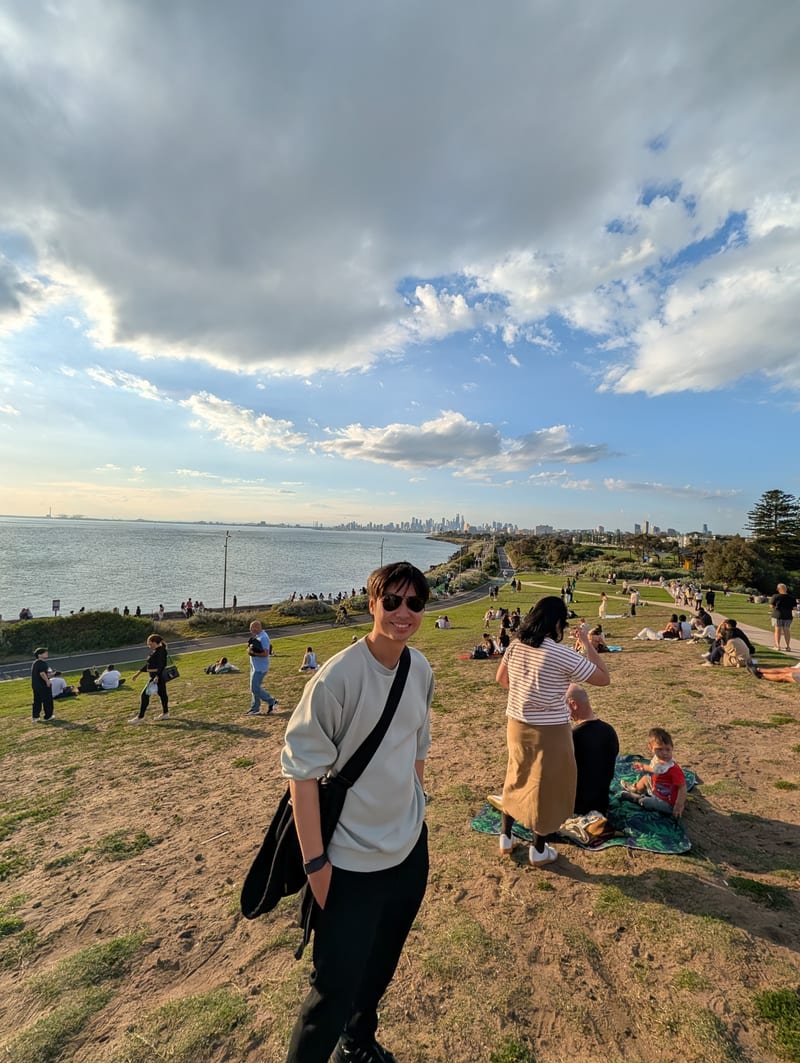
I'm Sean, a product designer based in Kuala Lumpur. I don't treat design as decoration. Every decision I make is grounded in a principle and tied back to a business outcome, because trading one against the other only moves the cost somewhere less visible.
Right now I'm building Hangry, a dish-first food discovery app, from the ground up. Every product and system decision is mine to make and defend. Alongside that I'm the embedded design partner on Swiftio, a platform for facilitating doctors to aged-care facilities, working with the founding and engineering team on problems that have no template to copy.
I care more about why a pattern exists than what it looks like. You'll usually find me building a design system before I build a screen, because consistency is a cost saver rather than a nice to have.
Outside of work I'm a tech person who optimises my own systems to deliver better work, whether that's trying new technology or getting organised with new hardware. Standing desks, mechanical keyboards, speakers. That habit is more or less why this site looks the way it does.
Frequently asked
The questions I get asked before every engagement.
- What kind of work do you take on?
- End-to-end product design: research through to shipped interface, plus the design system underneath it. I'm most useful on products where the problem hasn't been solved by someone else first.
- Do you do research, or just interface?
- Both, and I keep them separate. Research decides what to build; interface decides how it reads. When there's no budget for formal studies I use support logs, session recordings and five-user tests rather than skipping the evidence.
- How do you work with engineering?
- Specs first, arguments early. I write hard specifications and run feasibility reviews every fortnight, so the trade-offs get settled before code rather than after it. That's how the last ten MVPs shipped at full fidelity.
- How do you use AI in your process?
- In the workflow, not in the decisions. Synthesis, copy variants and rapid iteration are faster with it — roughly 40% off turnaround. What users actually said stays the input, and the judgement stays mine.
- What does a typical engagement look like?
- Two to twelve weeks depending on scope. It starts with a week of framing — users, constraints, the business outcome we're moving — then runs in weekly cycles with something reviewable at the end of each one.
- What are you available for right now?
- Selective product design engagements and design system work, remote from Kuala Lumpur and comfortable across GMT+8 to AEST. The fastest way in is an email with the problem, not the deliverable.